
If your fridge is not cooling but the freezer works fine in Oshawa homes, the problem is often caused by blocked air vents, a faulty evaporator fan, dirty condenser coils, or frost buildup inside the refrigerator compartment. Since the freezer creates the cold air, poor airflow can stop that cold air from reaching the fresh food section, causing warm temperatures, spoiled food, and uneven cooling inside the refrigerator.
Another common reason for refrigerator cooling problems is a damaged damper control, malfunctioning thermostat, or clogged defrost drain. Many Oshawa homeowners also experience fridge temperature issues due to overpacked shelves restricting air circulation or worn door seals letting warm air inside. Regular refrigerator maintenance, coil cleaning, and timely fridge repair services can help prevent compressor strain, energy waste, and complete appliance breakdowns.
Need Fridge Repair Services In Oshawa?
Need Fridge Repair Services in Oshawa? Get fast, reliable, and affordable solutions to fix all types of refrigerator cooling and performance issues.
Why This Problem Happens (And Why It Feels So Confusing)
This problem feels confusing because the freezer and refrigerator sections are connected but do not cool in the same way. In most refrigerators, the freezer produces all the cold air while the refrigerator relies on airflow through vents and fans. When the evaporator fan motor, air damper, or vent system stops working properly, the freezer may stay cold while the fridge compartment becomes warm, leading homeowners to think the entire appliance is failing.
Many Oshawa homeowners notice this issue suddenly because refrigerator cooling problems often develop slowly over time. Frost buildup, dirty condenser coils, blocked air circulation, thermostat failure, or a faulty defrost system can reduce cooling efficiency without completely shutting down the appliance. This creates uneven temperatures, food spoilage, excess moisture, and higher energy consumption, making the refrigerator appear partially functional while hidden internal components struggle to maintain proper cooling performance.
The Most Common Reasons Your Fridge Is Not Cooling in Oshawa
1. Failed or Obstructed Evaporator Fan Motor
A failed evaporator fan motor is a common reason behind fridge not cooling but freezer working fine in Oshawa homes. The evaporator fan moves cold air from the freezer into the refrigerator section. When it stops working, gets blocked by ice, or runs weak, airflow is disrupted and the fridge compartment becomes warm while the freezer still stays cold.
This issue usually shows signs like weak airflow, unusual humming noise, or uneven cooling inside the refrigerator. It leads to temperature imbalance, poor cooling performance, and food spoilage, and often requires inspection or fridge repair service in Oshawa.
2. Frost-Clogged Evaporator Coils and a Failing Defrost System
Frost buildup on evaporator coils happens when the defrost system fails, including the heater, timer, or sensor. Ice starts blocking the coils, preventing proper airflow into the fridge section and reducing cooling efficiency.
In Oshawa homes, this problem often shows a cold freezer but a warm fridge. It causes airflow blockage, reduced cooling, and extra pressure on the compressor, which can make the problem worse over time.
3. Blocked or Faulty Air Damper (Damper Control Assembly)
The air damper controls how cold air moves from the freezer to the fridge. If it becomes stuck or faulty, the fridge does not get enough cold air even though the freezer is working properly.
This leads to warm fridge temperatures, uneven cooling, and food not staying fresh. It is one of the common causes of refrigerator cooling issues in Oshawa households.
Damper assembly repair generally costs between $200 and $350 depending on the model and brand.
4. Dirty or Clogged Condenser Coils
Dirty condenser coils reduce the refrigerator’s ability to release heat. When dust and dirt build up, the system becomes less efficient and cooling performance drops.
This results in longer running time, weak cooling, and higher energy usage. The freezer may still work, but the fridge section struggles to maintain proper temperature.
This is one of the few causes you can address yourself. Pulling the fridge away from the wall, removing the rear access panel or toe grill, and vacuuming the coils with a brush attachment can sometimes restore normal cooling without any service call at all. Industry maintenance guidelines suggest cleaning condenser coils at least once per year, or every two to three months in homes with heavy pet shedding.
5. Worn or Damaged Door Gaskets
Door gaskets help seal the refrigerator door. When they are worn or damaged, warm air enters and cold air escapes.
This causes temperature fluctuations, moisture buildup, and constant compressor activity. Many cooling issues in Oshawa homes are linked to faulty door seals.
A simple test is to close the fridge door on a piece of paper and try to slide it out. If it slides out easily with no resistance, your door seal is not creating adequate contact and needs to be replaced. This is a relatively affordable repair, and in some cases the gasket can simply be cleaned and reseated if the distortion is minor.
6. Incorrect Temperature Settings or Demo Mode Activation
Before calling a technician, it is worth ruling out a setting that has been accidentally changed. The ideal refrigerator temperature is between 35 and 38 degrees Fahrenheit (or 2 to 3 degrees Celsius), with the freezer set to 0 degrees Fahrenheit or negative 18 Celsius. A thermostat dial nudged too high by a grocery bag or a child leaning on the control panel can raise temperatures in the fresh food compartment while leaving the freezer unaffected.
Sometimes the issue is simple, such as incorrect temperature settings or demo mode being turned on. In demo mode, cooling is limited or disabled.
This results in a warm fridge, low cooling output, and confusion even though the appliance is not actually broken. Adjusting the settings usually fixes the issue.
7. Refrigerant Leak or Compressor Start Relay Failure
A refrigerant leak or compressor start relay failure affects the entire cooling system. Without proper refrigerant flow or compressor operation, cooling becomes weak or stops completely.
This can cause clicking sounds, long running cycles, or no cooling at all. It is a serious issue that usually requires professional repair.
Refrigerant handling is regulated in Ontario and requires a certified technician with proper equipment. This is not a DIY repair. If you suspect a refrigerant issue, contact a licensed appliance repair service in Oshawa for a proper sealed system diagnosis.
8. Faulty Thermistor (Temperature Sensor)
The thermistor monitors internal temperature and sends signals to the control board. If it fails, it gives incorrect readings.
This leads to unstable cooling, incorrect temperature control, and uneven performance. The freezer may still work, but the fridge section cannot maintain proper cooling until the sensor is replaced.
If you notice that your compressor almost never seems to run and your food is consistently warm despite correct thermostat settings, a faulty thermistor is worth investigating. This component is generally inexpensive to replace once correctly diagnosed.
Oshawa-Specific Factors That Make This Problem More Common
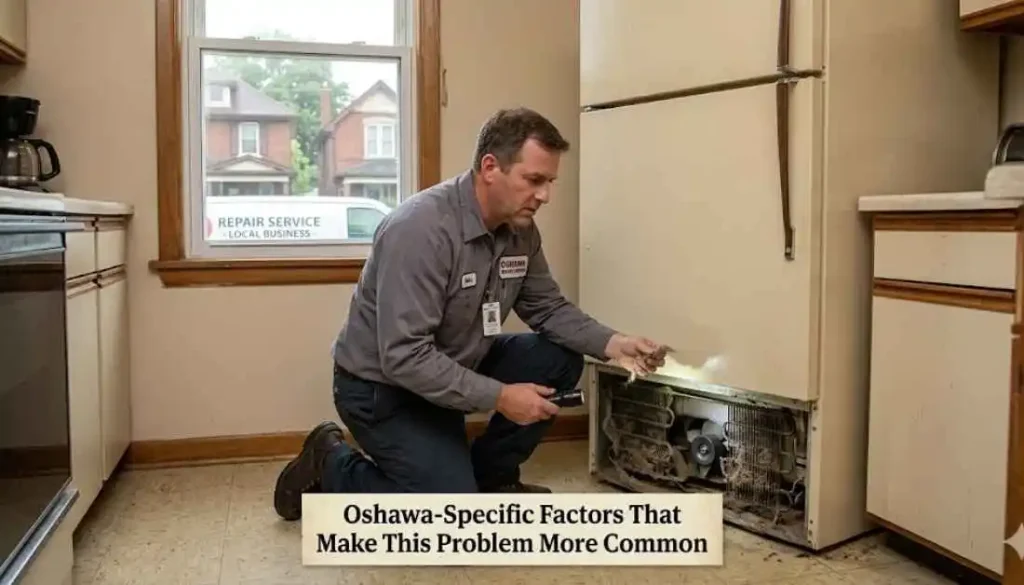
Oshawa’s climate plays a role that often gets overlooked. Durham Region experiences genuinely cold winters and warm, humid summers. Here is how that affects your refrigerator.
Winter garage placement: Many Oshawa homeowners keep a secondary fridge or freezer in an unheated garage or basement during winter months. When ambient temperatures drop below 4 degrees Celsius (the temperature inside a normal fridge), the refrigerator’s thermostat may never signal the compressor to run at all because the surrounding air is already cold enough. This can cause food in the fridge compartment to warm up while items in the freezer remain frozen due to the cold ambient temperature rather than active cooling.
Humidity and frost buildup: Oshawa summers bring high humidity, and every time the refrigerator door is opened, moist air enters. Over multiple years, this contributes to faster frost accumulation on evaporator coils, accelerating defrost system issues.
Hard water and older housing stock: Older homes in areas like Lakeview, Farewell, and Central Oshawa often have harder municipal water, which can affect ice makers and water dispensers and indirectly lead to moisture-related issues inside the refrigerator cabinet.
Kitchen layout and clearance: Many semi-detached and townhome kitchens in Oshawa, particularly in developments from the 1980s and 1990s, were not designed to accommodate modern-sized refrigerators. A fridge pushed too tightly into a cabinet enclosure without proper clearance on the sides and rear overheats its compressor and condenser, leading to reduced cooling efficiency in the fresh food section first.
How to Diagnose the Problem Yourself Before Calling a Technician
Running through a quick self-diagnosis can save you money and give your technician a head start when they arrive.
Step one: Check that the fridge is plugged in and that no breaker has tripped. Open the door and confirm the interior light comes on.
Step two: Check your temperature settings. Make sure the refrigerator dial or digital setting is between 35 and 38 degrees Fahrenheit. If you have an electronic display, look in your owner’s manual to rule out demo or showroom mode.
Step three: Open the freezer door, press the door switch manually, and listen for the evaporator fan. No sound means the fan may be faulty or iced over.
Step four: Inspect the vents between the freezer and refrigerator sections. Make sure no food packages are blocking the airflow path. Rearrange if needed and wait 24 hours to see if temperatures improve.
Step five: Pull the fridge away from the wall and visually inspect the condenser coils. If they are dusty or coated in pet hair, clean them with a vacuum brush and observe whether cooling improves over the following 24 hours.
Step six: Check your door gaskets using the paper slip test. If the seal is compromised, wipe down the gasket with warm soapy water and see if it reseats properly.
If none of these steps produce improvement, the issue is almost certainly a mechanical or electrical component failure that requires professional diagnosis.
Repair vs. Replace: What Makes Sense for Oshawa Homeowners
A common question after discovering a faulty refrigerator is whether to repair or replace. The answer depends on a few practical factors.
The general rule of thumb used by appliance repair professionals across Ontario is that if your fridge is less than ten to twelve years old and the estimated repair cost is less than half the price of a comparable new unit, repair is the smarter financial decision. Most of the common causes described in this article, including evaporator fan replacement, defrost system repair, damper assembly service, and condenser coil cleaning, fall well within that range.
For an evaporator fan motor, expect to pay between $100 and $300 total for parts and labour. For defrost system components (heater, timer, or thermostat), typical costs in the Oshawa area range from $200 to $400. Damper assembly repair generally lands between $200 and $350. Condenser coil cleaning, if done professionally, is usually $89 to $150.
Compressor replacement is the notable exception. At $600 to $1,200 including parts and labour, compressor work on an older refrigerator often pushes past the cost threshold where replacement becomes the wiser investment. However, since the freezer is working in your situation, a full compressor failure is unlikely to be the cause.
Preventive Maintenance Tips to Avoid Future Cooling Problems
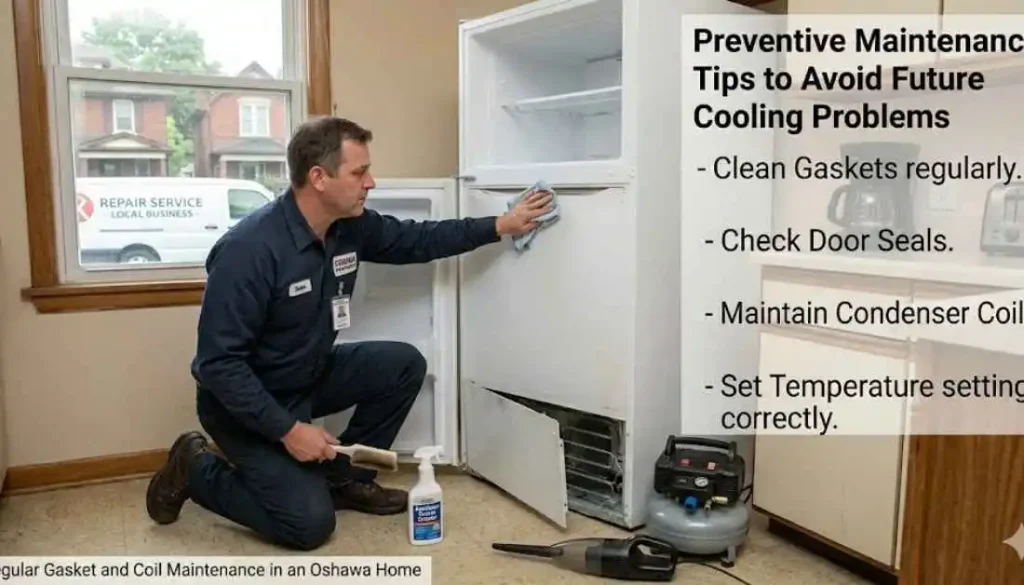
Preventive maintenance is the best way to avoid common refrigerator cooling problems in Oshawa homes, especially issues like fridge not cooling while freezer works fine. Regularly cleaning the condenser coils, checking door gaskets for proper sealing, and making sure air vents inside the fridge are not blocked helps maintain steady airflow and balanced cooling. It is also important to keep the temperature settings at the recommended level and avoid overloading the fridge so cold air can circulate properly.
Another important step is to listen for unusual noises and monitor how the refrigerator is performing over time. Scheduling routine inspection of the evaporator fan, defrost system, and thermostat can help detect early signs of failure before they turn into major fridge repair issues. Simple habits like keeping the door closed properly and avoiding warm food storage inside the fridge also help improve cooling efficiency and extend the appliance lifespan.
When to Call a Professional Appliance Repair Technician in Oshawa
Some refrigerator issues are safe and straightforward enough for a homeowner to address. Cleaning condenser coils, checking temperature settings, rearranging food items blocking vents, and manually defrosting a frost-clogged freezer are all within reach for most people.
However, anything involving electrical components such as the evaporator fan motor, defrost heater, defrost thermostat, control board, thermistor, or damper motor should be left to a certified technician. Refrigerant issues are legally required to be handled by licensed professionals in Ontario. Attempting to replace or repair these components without proper training risks damaging the appliance further or voiding any remaining warranty.
Same-day refrigerator repair services are available throughout Oshawa, covering Central, North, South, East, and West Oshawa, and typically service all major brands including Whirlpool, Samsung, LG, GE, Frigidaire, Maytag, Bosch, and KitchenAid.
👉🏻Discover More About Unique Problems[ Fridge Stops Cooling in Oshawa Homes ]
Frequently Asked Questions
How long will it take for my fridge to cool down after a repair?
After a refrigerator repair, it usually takes 4 to 24 hours for the fridge to reach proper cooling temperature. If the freezer was affected or the system was fully reset, it may take up to 24–48 hours to stabilize. The cooling time depends on factors like room temperature, how full the fridge is, and whether airflow and compressor function have fully recovered. Keeping the door closed helps it cool faster.
Is it safe to eat food from a fridge that has been warm?
If the fridge has been warm for more than 2 hours, some foods may not be safe, especially dairy, meat, seafood, and cooked leftovers. Bacteria can grow quickly in warm temperatures. However, frozen foods from the freezer are usually still safe if they remain solid and partially frozen. When in doubt, it’s safer to discard high-risk foods to avoid foodborne illness.
Can I use my freezer while the fridge is not cooling?
Yes, in most cases the freezer can still be used even if the fridge is not cooling properly. This is common when there is an airflow issue, damper problem, or evaporator fan fault. However, it’s important to monitor freezer temperature because some faults can worsen over time and eventually affect both sections.
Why would this problem start suddenly with no warning?
A refrigerator can stop cooling suddenly due to hidden component failure such as a faulty evaporator fan, defrost system failure, thermostat issue, or relay problem. Sometimes frost builds up slowly until it blocks airflow completely, making the problem appear overnight. Power fluctuations or compressor stress can also trigger sudden cooling failure without early signs.
Does Oshawa’s cold weather affect refrigerator performance?
Cold weather in Oshawa can indirectly affect refrigerator performance, especially in garages or cold rooms. If the surrounding temperature drops too low, the thermostat may not cycle properly, and the fridge may not run as expected. This can lead to uneven cooling or false temperature readings. Modern refrigerators are designed for indoor use, so extreme cold environments can sometimes cause inconsistent operation.
Conclusion
When a fridge is not cooling but the freezer is working fine in Oshawa homes, the issue is usually related to airflow, frost buildup, or small mechanical faults rather than a complete breakdown. Problems like a faulty evaporator fan, blocked air damper, dirty condenser coils, worn door gaskets, or defrost system failure can all disrupt normal cooling and create uneven temperatures inside the refrigerator.
Most of these issues can be prevented with regular maintenance and early attention to warning signs such as weak airflow, unusual noise, or temperature fluctuations. In more serious cases like refrigerant leaks or compressor problems, professional refrigerator repair is the safest option to restore proper cooling performance and avoid further damage.