
You can tell your refrigerator compressor is failing if your fridge stops cooling properly, makes unusual clicking, buzzing, or rattling noises, runs constantly without cycling off, feels excessively hot at the back, causes a spike in your electricity bill, or shows frost buildup around the evaporator coils. These warning signs often appear weeks or even months before a complete breakdown, giving you a window to act before food spoils and costs pile up.
Need Appliance Repair Services In Oshawa?
Need reliable refrigerator repair or appliance repair help? Get fast and affordable appliance repair services in Oshawa for refrigerators, washers, dryers, ovens, and more.
What Does a Refrigerator Compressor Actually Do?
Before diving into the warning signs, it helps to understand what the compressor does and why it matters so much. The compressor is widely referred to as the “heart” of your refrigerator, and that comparison is accurate. It is responsible for compressing refrigerant gas, raising its pressure and temperature, and then circulating it through the sealed cooling system. This refrigeration cycle is what removes heat from inside the fridge and keeps your food at a safe, consistent temperature.
Without a properly functioning compressor, your refrigerator is essentially just an insulated cabinet. The condenser coils, evaporator coils, thermostat, and expansion valve all depend on the compressor doing its job. When it begins to degrade, the entire cooling system suffers, and that deterioration shows up in ways you can detect at home without any special tools.If compressor issues are ignored, they can lead to costly repairs. Getting help from a professional appliance repair service can prevent further damage and keep your refrigerator running efficiently.
8 Clear Signs Your Refrigerator Compressor Is Failing
1. Your Refrigerator Is Not Cooling Properly
This is usually the first and most noticeable symptom. If your fridge is struggling to reach or maintain the temperature you have set on the thermostat, the compressor may no longer be circulating refrigerant efficiently. You might notice that drinks never feel fully cold, that dairy products spoil ahead of schedule, or that produce wilts faster than it should.
A particularly telling pattern is when the freezer compartment still feels cold but the fresh food section warms up. This uneven cooling points to compressor inefficiency rather than a simple thermostat problem. If adjusting the temperature dial does not bring the internal temperature back to the expected range within a few hours, the issue is almost certainly deeper than a routine calibration fix.
2. Strange or Unusually Loud Noises
A normally functioning compressor produces a quiet, low hum during its operating cycle. That background sound is so familiar that most people stop noticing it entirely. What should get your attention immediately is any change in the character of that sound.
Grinding, rattling, loud buzzing, or a sharp clicking that repeats every few minutes are all mechanical red flags. A repetitive clicking sound in particular often means the compressor is attempting to start but cannot complete its startup cycle. This repeated strain on the electrical components accelerates wear and can lead to total failure faster than most homeowners expect. Any new noise coming from the lower back of the fridge, where the compressor is located, deserves prompt attention.
3. The Compressor Runs Constantly Without Shutting Off
Under normal operating conditions, a refrigerator compressor cycles on and off throughout the day. It runs until the interior reaches the set temperature, shuts off, and then starts again when the temperature begins to rise. This on and off rhythm is how the appliance maintains efficiency over time.
When the compressor begins to fail, it loses the ability to cool the interior within a reasonable timeframe. To compensate, it runs longer and longer, eventually reaching a state where it barely shuts off at all. You may not realize this immediately because the fridge still appears to be working, but continuous operation is one of the clearest early indicators that the compressor is operating far outside its normal efficiency range.
4. The Back of the Refrigerator Feels Excessively Hot
It is completely normal for the back panel of a refrigerator to feel warm, since the condenser coils are designed to release heat as part of the refrigeration cycle. However, there is a significant difference between warm and genuinely hot.
If the rear of your fridge, particularly near the compressor housing, feels too hot to touch comfortably, or if you detect a burning smell coming from that area, something is wrong. Excessive heat can result from a malfunctioning condenser fan, low refrigerant levels, clogged condenser coils due to dust and debris buildup, or the compressor itself overworking due to internal wear. Any burning smell should be treated as an urgent issue that warrants immediate professional inspection.
5. Your Electricity Bills Have Increased Without Explanation
A failing compressor draws significantly more electrical current than a healthy one. Because it has to run longer and work harder to achieve the same cooling effect, it consumes far more power over the course of a day. If you notice that your utility bill has crept upward without any change in household behavior, and especially if you are seeing other symptoms on this list, the compressor is a strong candidate for the cause.
This increased energy consumption is not just a financial concern. It also generates more heat inside the compressor unit itself, which accelerates mechanical degradation and shortens the remaining lifespan of the component.
6. Frequent Tripping of the Circuit Breaker
When a compressor begins to fail internally, it can draw far more current than the circuit is designed to handle. If your refrigerator is causing a circuit breaker to trip repeatedly, especially in combination with any other symptoms listed here, this is a serious warning sign. Do not simply reset the breaker and ignore it. A compressor drawing excess current is both a major appliance issue and a potential electrical safety concern that should be evaluated by a qualified technician without delay.
7. Frost or Ice Buildup in Unusual Places
Abnormal frost accumulation inside the freezer or around the evaporator coils can indicate that the compressor is not maintaining consistent temperature cycles. When the compressor fails to run at proper intervals, temperature fluctuations inside the fridge become more extreme, and moisture in the air freezes in irregular patterns rather than being managed through the normal defrost cycle.
Additionally, if you notice oily residue or suspect a refrigerant leak around the compressor area at the back of the fridge, this is another sign that the sealed system has been compromised. Refrigerant leaks require EPA certified technicians to handle, since these gases are both environmentally harmful and potentially dangerous.
8. Food Spoiling Faster Than Normal
This symptom ties directly to inadequate cooling but is worth noting separately because it is often the first thing homeowners actually register as a problem. If groceries are not lasting as long as they used to, if leftovers seem to go bad within a day or two, or if you find yourself throwing out food more frequently, the root cause may be a compressor that can no longer hold a stable internal temperature.
Food safety guidelines recommend keeping a refrigerator at or below 40 degrees Fahrenheit (4 degrees Celsius). A failing compressor may keep the interior close to that range but never quite reach it, creating conditions that accelerate bacterial growth without the temperature being obviously wrong.
How to Do a Basic At Home Compressor Check
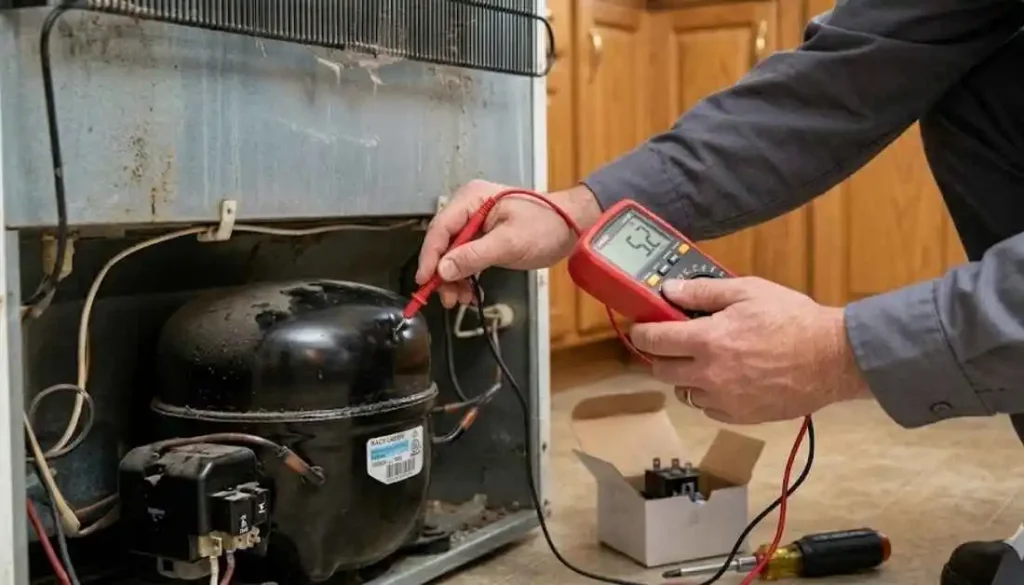
Before calling a repair technician, there is one simple test you can perform at home that can help narrow down whether the compressor itself is the issue or whether the problem lies with the starter relay, which is a smaller and far less expensive component.
Unplug the refrigerator and pull it away from the wall. Locate the compressor at the lower back of the unit. Find the starter relay, which is a small component plugged into the side of the compressor, roughly the size of a small ink cartridge. Unplug the relay and shake it next to your ear. If you hear a rattling sound, the starter relay has failed and needs to be replaced. This is a relatively affordable fix. If there is no rattle and the relay appears intact, the compressor itself is more likely the source of the problem and will need professional evaluation.
You can also use a multimeter to test the compressor motor for electrical continuity, though this step requires some comfort with basic appliance diagnostics and should only be attempted with the refrigerator safely unplugged.If the issue persists after basic troubleshooting, professional refrigerator repair services can help identify the exact cause and restore proper cooling performance.
Common Causes of Compressor Failure
Understanding what causes a compressor to fail can help you extend the life of your current unit and make smarter maintenance decisions going forward.
Voltage and current irregularities are among the most common culprits. Power surges, brownouts, and unstable electrical supply can damage the internal windings of the compressor motor over time. Using a surge protector for your refrigerator is a simple preventive measure that many homeowners overlook.
Short cycling occurs when the compressor turns on and off too rapidly, often because of a faulty thermostat, dirty condenser coils, or a refrigerant charge that is too high or too low. Each rapid startup places mechanical stress on the compressor’s internal components.
Dirty condenser coils prevent proper heat dissipation, forcing the compressor to work much harder than designed to maintain the set temperature. Cleaning these coils every six months with a vacuum or brush is one of the most effective maintenance habits you can adopt.
Refrigerant contamination or improper charge is another significant cause. If there is too much or too little refrigerant in the sealed system, or if moisture or debris has entered the system, the compressor cannot operate correctly. This type of issue requires a certified technician to diagnose and repair.
Natural wear and tear accounts for a large share of compressor failures, particularly in appliances that are more than ten years old. Compressors are built to be durable, but the constant thermal and mechanical cycling they endure over years of operation gradually degrades internal components.
How Long Should a Refrigerator Compressor Last?
A well maintained compressor in a quality refrigerator is built to last the full lifespan of the appliance. Most compressors are rated to run reliably for ten to fifteen years, and in some cases high quality units in regularly serviced refrigerators can last up to twenty years.
Several major appliance brands, including Samsung and Maytag, now offer ten year limited warranties specifically on compressors, which reflects both the component’s expected longevity and its critical importance to the appliance’s function. If your refrigerator is less than five years old and the compressor is failing, the cause is more likely an electrical issue, a refrigerant problem, or a manufacturing defect rather than ordinary wear.
Repair or Replace: Making the Right Call
This is the question most homeowners eventually face when compressor problems become undeniable. The financial calculus here is fairly straightforward once you have a few key pieces of information.
Compressor repair typically costs between $200 and $450. Full replacement of the compressor, which involves evacuating and recharging the refrigerant system and often requires specialized tools and EPA certification, generally runs between $500 and $1,500 depending on the brand, model, and regional labor costs.
A useful rule of thumb is the fifty percent guideline. If the cost of repairing or replacing the compressor equals or exceeds fifty percent of the cost of buying a comparable new refrigerator, replacement is usually the wiser investment. An older appliance that is approaching the end of its expected service life is also a poor candidate for a costly compressor job, since other components are statistically more likely to fail soon after.
On the other hand, if your refrigerator is less than eight years old, is a high quality or high end model, and is otherwise in good condition, a compressor replacement can extend its usable life by several years and represent reasonable value.
One important note: compressor work involves handling regulated refrigerants, which requires EPA certification under federal law. This is not a DIY project for most homeowners, and attempting it without proper certification and equipment is both illegal in most circumstances and genuinely dangerous.
Preventive Maintenance to Keep Your Compressor Healthy
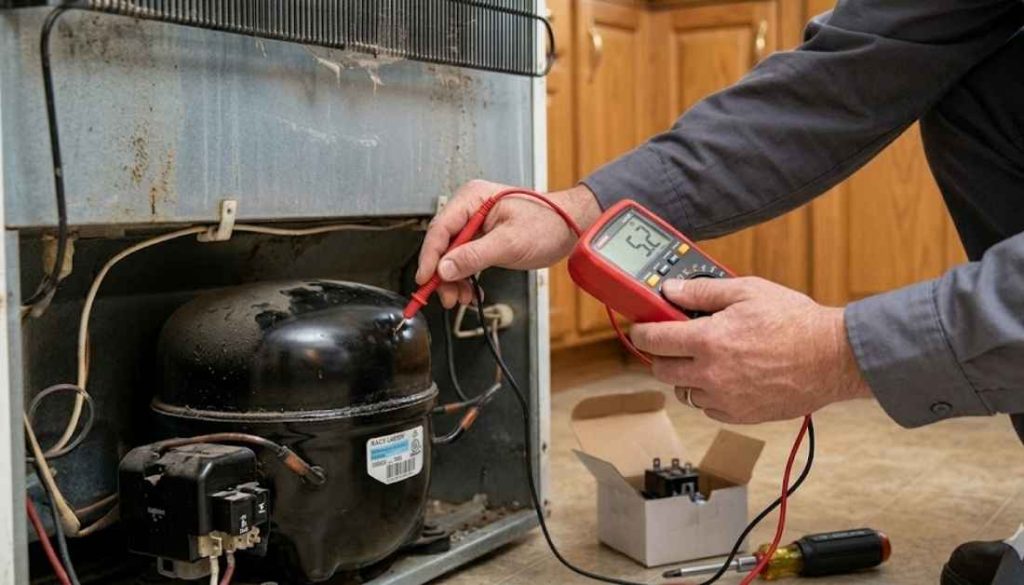
The best way to avoid an unexpected and expensive compressor failure is consistent, simple maintenance.
Clean the condenser coils at least twice a year. On most refrigerators these are located at the back or along the bottom, and dust buildup on these coils forces the compressor to work significantly harder. A vacuum with a brush attachment handles this job in minutes.
Check the door gaskets regularly. A worn or cracked door seal allows warm air to enter the cabinet continuously, increasing the thermal load on the compressor and causing it to run more often than it should.
Ensure adequate clearance around the refrigerator. The appliance needs proper airflow around its exterior to dissipate heat effectively. Pushing it flush against a wall or packing it into a tight cabinet space restricts that airflow and contributes to overheating.
Avoid overloading the interior. A packed refrigerator restricts air circulation inside the cabinet, which means the compressor has to work harder to distribute cold air evenly. Leaving some space between items allows for proper airflow and more even temperature distribution.
Keep the refrigerator level. An appliance that is not properly balanced places uneven mechanical stress on the compressor and its mounting components over time.
When to Call a Professional
Some situations call for immediate professional attention rather than further at home investigation. If your refrigerator has stopped cooling entirely, if you smell something burning near the compressor, if the circuit breaker trips repeatedly when the fridge is plugged in, or if you suspect a refrigerant leak, contact a qualified appliance technician right away.
A professional will be able to confirm whether the compressor is truly at fault or whether the real culprit is something less expensive, such as a faulty start relay, a defective thermostat, a blocked condenser fan, or a failed capacitor. Jumping directly to compressor replacement without proper diagnosis can mean spending hundreds of dollars unnecessarily.
Look for technicians who are certified by the EPA to handle refrigerants and who carry manufacturer specific qualifications for your appliance brand. If your refrigerator is still under warranty, contact the manufacturer directly before scheduling a third party repair, as unauthorized service can void coverage. Need urgent help for a faulty appliance? Expert emergency appliance repair technicians can diagnose and fix problems before they worsen.
👉🏻Discover More About Unique Appliance Problems[ Why Is My Fridge Not Cooling But the Freezer Works Fine ]
Frequently Asked Questions
How do I know if my refrigerator compressor is failing?
Common signs of a failing refrigerator compressor include loud clicking noises, constant overheating, poor cooling performance, frequent cycling on and off, and spoiled food even when the temperature is set correctly. In some cases, the fridge may stop cooling completely while the interior light still works.
Can a refrigerator run with a bad compressor?
A refrigerator may still run temporarily with a weak compressor, but it will struggle to maintain proper cooling. Over time, the appliance may stop cooling altogether, causing food spoilage and higher energy consumption.
What causes a refrigerator compressor to fail?
Refrigerator compressors can fail due to overheating, dirty condenser coils, power surges, low refrigerant levels, lack of maintenance, or normal wear and tear over time. Continuous heavy usage can also shorten compressor lifespan.
Is it worth repairing a refrigerator compressor?
Repairing a refrigerator compressor can be worth it if the fridge is relatively new and in good overall condition. However, for older refrigerators, replacing the entire appliance may be more cost effective because compressor repairs can be expensive.
How long does a refrigerator compressor usually last?
Most refrigerator compressors last between 10 and 15 years with proper maintenance. Regular cleaning of condenser coils, ensuring good airflow, and avoiding overworking the appliance can help extend compressor life.
Conclusion
A failing refrigerator compressor rarely gives out without sending warning signals first. Recognizing the early signs, such as inconsistent cooling, unfamiliar noises, a compressor that never seems to rest, and an unexplained rise in your energy costs, gives you the opportunity to act before a small problem becomes a complete appliance failure. The sooner you investigate these symptoms, the more options you have, whether that means a simple starter relay swap, a professional compressor service, or an informed decision to invest in a new, energy efficient refrigerator.
Taking care of this component does not require technical expertise or expensive tools. Routine habits like cleaning the condenser coils, inspecting door seals, and keeping the area around the fridge well ventilated go a long way toward extending compressor life well beyond its expected range. When problems do arise, knowing what to look for and when to call a professional puts you in a much stronger position to protect both your appliance and your household budget.