
If your fridge is making loud humming or clicking noises, it usually means one of a handful of things: a failing compressor start relay, dirty condenser coils forcing the compressor to overwork, ice buildup obstructing the evaporator fan, or a malfunctioning defrost timer cycling on and off. Some of these sounds are completely normal parts of refrigerator operation, while others are early warning signs of a mechanical failure that needs attention before your food spoils and the repair bill grows.
Understanding the difference between a “normal” hum and a “something is wrong” hum is the first step toward fixing the problem yourself and avoiding an unnecessary appliance repair call.
Is Your Home Appliance Broken in Oshawa?
Looking for trusted appliance repair services in Oshawa? Get fast and reliable repairs for fridges, washers, dryers, and more by experienced technicians.
Is Your Fridge Supposed to Make Noise?
Yes, absolutely. A modern refrigerator is not a silent appliance. It contains a compressor motor, two or more fans, a defrost system, an ice maker, and a network of refrigerant lines, all of which produce sound during normal operation. The key is learning what sounds belong and which ones are telling you something has gone wrong.
A gentle, low-pitched hum coming from the back or bottom of your refrigerator is the sound of the compressor doing its job. It kicks on periodically throughout the day to maintain your set temperature, and that background hum you barely notice is a healthy sign. Similarly, a soft whirring from inside the freezer compartment is the evaporator fan pushing cold air through the vents, which is perfectly normal refrigerator behavior.
The noises that signal trouble are the ones that are new, loud, constant, or paired with temperature problems inside the fridge. A refrigerator that suddenly sounds different from how it normally sounds deserves a closer look, even if the cooling seems fine for now.
What Does a Loud Humming Sound Mean?
A loud or unusually aggressive humming sound coming from your refrigerator is one of the most common complaints homeowners have, and it almost always points to one of these root causes.
Dirty Condenser Coils
The condenser coils are the winding metal tubes located either along the back wall or beneath the bottom front panel of your refrigerator. Their job is to release heat absorbed from inside the fridge out into the surrounding room. When these coils become coated in dust, pet hair, and debris over time, they lose the ability to dissipate heat efficiently. The compressor then has to run longer and harder to compensate, producing a noticeably louder hum than usual.
Cleaning condenser coils is one of the simplest and most impactful pieces of refrigerator maintenance you can do. Unplug the unit, locate the coils, and use a vacuum cleaner with a brush attachment or a purpose-made condenser coil cleaning brush to remove the buildup. Most appliance repair professionals recommend doing this every six to twelve months, especially in homes with pets.
Frost Buildup Around the Evaporator
The evaporator is located inside the freezer compartment, behind the rear panel. It is responsible for absorbing heat from inside the fridge, and under normal conditions, a defrost cycle melts away any frost that accumulates on it. When the defrost system malfunctions, whether due to a faulty defrost timer, a burned-out defrost heater, or a failed defrost thermostat, frost builds up excessively on the evaporator coils and fan.
When ice builds up thick enough to partially block the evaporator fan blades, the motor strains against the obstruction and produces a loud buzzing or grinding hum. This noise often changes or stops entirely when you open the freezer door, because the door switch cuts power to the evaporator fan when the door is opened. If your noisy fridge quiets down the moment you open the freezer, ice buildup around the evaporator fan is almost certainly your diagnosis.
A Failing or Overworked Compressor
The compressor is the heart of your refrigerator’s sealed refrigeration system. It is the large, dome-shaped black metal tank mounted at the bottom rear of the appliance, and it operates under high pressure and heat to compress refrigerant gas and circulate it through the cooling system. A healthy compressor produces a steady, low hum. A compressor that is aging, overheating, or beginning to fail will produce an unusually loud, persistent hum or buzz that you can hear from another room.
If your refrigerator’s loud humming is accompanied by the fridge not staying as cold as it should, or if the compressor seems to run constantly without cycling off, these are signs that the compressor is under serious mechanical or electrical stress. Compressor repairs require EPA-certified technicians due to the refrigerant involved, so this is one area where professional diagnosis is necessary.
Temperature Settings That Are Too Low
An often overlooked cause of loud refrigerator humming is simply having the internal temperature set lower than necessary. When the thermostat demands an extremely cold temperature, the compressor runs more frequently and for longer durations, amplifying the noise level. Checking and slightly adjusting your temperature settings is always worth trying before assuming a mechanical fault.
What Does a Clicking Sound From the Fridge Mean?
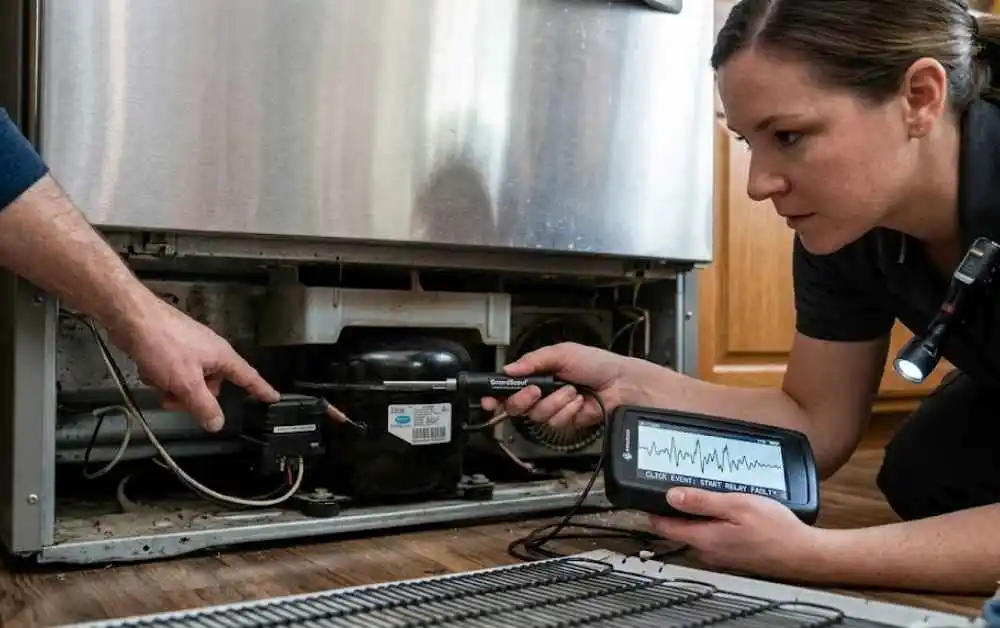
Clicking noises from a refrigerator fall into two categories: completely normal operational sounds, and sounds that indicate a developing mechanical problem. Knowing which category your clicking falls into requires paying attention to when the clicks happen and what else is going on with the fridge.
Normal Clicking Sounds
Occasional clicking from your refrigerator is often nothing to worry about. The defrost timer produces clicks as it cycles the defrost system on and off at regular intervals throughout the day. If your fridge has an ice maker, the water inlet valve clicks open to fill the ice maker tray, and the ice maker arm clicks as it drops finished ice cubes into the storage bin. These clicks tend to happen predictably and are brief, not continuous.
Thermal expansion also produces occasional popping or clicking sounds. As the interior plastic panels heat up and cool down during defrost cycles and cooling cycles, they expand and contract slightly, creating harmless cracking or popping noises. This is especially common in newer refrigerators and is not a cause for concern.
The Clicking Sound That Signals a Bad Start Relay
The most important clicking sound to recognize is a repetitive pattern, often described as a “click, buzz, click” cycle happening every three to five minutes. This sound almost always points to a failing compressor start relay, and it is one of the most common refrigerator problems homeowners encounter.
The start relay is a small plastic component that plugs into the side of the compressor. Its function is to give the compressor an electrical boost to start running. When the relay fails internally, the compressor tries to start, cannot draw enough power to do so, and triggers its built-in thermal overload protector, which cuts the power to prevent overheating. The fridge then tries again a few minutes later, producing that distinctive repetitive clicking pattern.
To check whether your start relay has failed, unplug the refrigerator, remove the rear access panel, and locate the small plastic box attached to the side of the compressor. Pull it off carefully and shake it gently near your ear. If you hear a rattling sound, the ceramic disc inside has broken loose, and the relay has failed. A new start relay typically costs between fifteen and forty-five dollars depending on your refrigerator brand, and replacing it is a straightforward DIY repair that most homeowners can complete in under thirty minutes.
Clicking from the Condenser Fan
The condenser fan is located at the bottom rear of the refrigerator, near the compressor. It draws air across the condenser coils to help dissipate heat. If the fan blades become obstructed by debris, or if the blades are bent and scraping against part of the housing, you will hear a clicking or scraping sound that coincides with the fan spinning. In some cases, a worn fan motor with failing bearings produces a similar noise.
Unplugging the fridge and manually spinning the condenser fan blades will tell you a lot. If the blades do not turn freely, or if you can see debris or a bent blade, you have found your source. Cleaning the obstruction or replacing the fan motor resolves the issue in most cases.
Ice Maker Clicking Problems
Refrigerators equipped with an automatic ice maker have several components that can produce clicking when they begin to fail: the water inlet valve, the ice maker arm, and the ice dispenser mechanism itself. If the clicking seems to come from the upper left or right side of the fridge interior, and particularly if you are getting less ice than usual or notice water leaking, the ice maker assembly is the likely culprit.
How to Diagnose Where the Noise Is Coming From
Before spending money on parts or calling a technician, spend a few minutes listening carefully and systematically to pinpoint the source of the noise. The physical location of the sound tells you a great deal about which component is responsible.
Open the refrigerator door and listen. Then open the freezer door and listen. If the noise significantly changes or stops when you open the freezer door, you are almost certainly dealing with an evaporator fan issue or ice buildup inside the freezer. If the noise continues unchanged with both doors open and comes from the back or bottom of the unit, the compressor, condenser fan, or start relay is the more likely source.
Next, listen to where the sound is loudest. Noise from inside the freezer compartment points to the evaporator fan. Noise from underneath the fridge points to a loose drain pan or dirty condenser fan. Noise from the bottom rear corner of the unit, where the large black compressor tank lives, points to the compressor or its start relay. A brief buzzing every fifteen to twenty minutes from the same area suggests the water inlet valve for the ice maker.
Step-by-Step Fixes You Can Try at Home
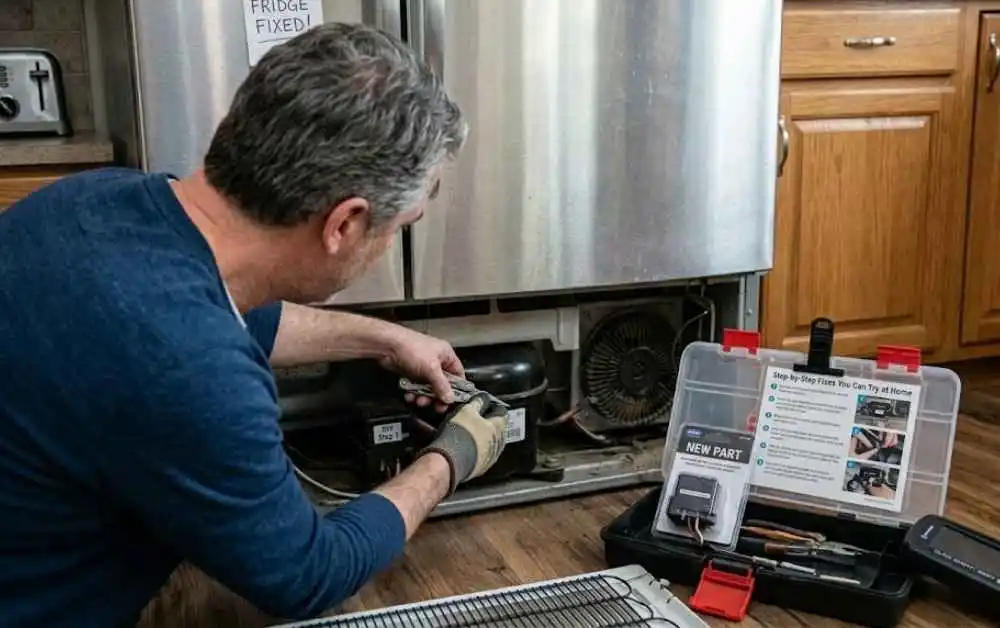
Once you have identified the likely source of the noise, here are the practical steps to address the most common causes.
Cleaning the Condenser Coils
Unplug the refrigerator. If the coils are at the back, simply pull the fridge away from the wall to access them. If they are beneath the fridge, remove the front base grille. Use a vacuum cleaner with a brush attachment to remove dust and debris from the coils and the fan area. Plug the fridge back in and give it a few hours. A cleaner coil system almost always results in a quieter compressor.
Defrosting the Evaporator Fan Area
If ice buildup around the evaporator fan is causing the noise, the most straightforward fix is a manual defrost. Unplug the refrigerator, remove all food, and leave both doors open for twenty-four to forty-eight hours to allow all the ice to melt naturally. Place towels around the base to absorb the water. Once fully defrosted, plug the fridge back in and monitor it. If the noise returns within a few weeks, the defrost system components such as the defrost heater, defrost thermostat, or defrost timer need to be tested and replaced.
Replacing the Start Relay
Unplug the refrigerator. Remove the rear access panel by unscrewing the fasteners along the edges. Locate the compressor, the large black dome at the bottom, and find the small plastic start relay plugged into its side terminals. Pull it straight off. Shake it near your ear. If it rattles, order a replacement relay using your refrigerator’s model number, which is printed on a sticker inside the fresh food compartment. Plug the new relay in, replace the access panel, and restore power. Listen for the compressor to start running within a few minutes.
Checking and Cleaning the Condenser Fan
With the fridge unplugged and pulled away from the wall, remove the rear access panel. Locate the small fan near the compressor. Try spinning the blades by hand. They should turn smoothly and freely. Remove any debris, and straighten any bent blades carefully. If the motor does not spin freely or shows signs of wear, replace the condenser fan motor using your refrigerator’s model number to find the correct part.
Leveling the Refrigerator
A refrigerator that is not sitting level on the floor transmits vibration unevenly, which amplifies the compressor noise into a loud rattle or hum through the floor and surrounding cabinetry. Check the level of your fridge with a spirit level placed on top. Most refrigerators have adjustable feet at the front that can be turned to raise or lower each corner. A properly leveled refrigerator should tilt slightly backward so that the doors close on their own when nudged.
When to Call a Professional Appliance Technician
Some refrigerator problems are beyond the scope of a safe DIY repair, and knowing when to stop and call a professional saves time and prevents further damage.
If you replace the start relay and the clicking and failure to cool continues, the compressor itself may have failed mechanically. A seized or internally damaged compressor requires a licensed appliance technician with EPA 608 refrigerant handling certification, specialized tools, and diagnostic equipment. Compressor replacement typically costs between three hundred and seven hundred dollars including parts and labor, and for a refrigerator more than eight to ten years old, replacement of the entire unit may be more economical.
Any noise accompanied by a hissing sound and loss of cooling suggests a refrigerant leak in the sealed system. Refrigerant handling is regulated and cannot legally be performed by unlicensed individuals. This is a definitive call-a-professional situation.
Similarly, if you notice burn marks, a burning smell, or tripped circuit breakers alongside the unusual noises, do not attempt further DIY diagnosis. Disconnect the refrigerator from power and contact a qualified technician immediately.
Preventive Maintenance Tips to Keep Your Fridge Quiet
Keeping your refrigerator running quietly and efficiently is largely a matter of consistent, simple maintenance. Clean the condenser coils every six to twelve months, more frequently if you have pets that shed. Make sure the refrigerator has adequate clearance from walls and cabinetry on the sides and back to allow for proper airflow and heat dissipation. Avoid overpacking the fridge, which restricts airflow and forces the compressor to run longer. Keep the door seals clean and intact so the cold air stays inside without the compressor overcompensating.
Check the drain pan under the fridge occasionally and ensure it is seated properly, since a loose drain pan amplifies compressor vibration into an annoying rattle. Replace the door gaskets when you notice cracking or gaps, and have a technician inspect and service the appliance if you notice any early warning signs such as increased noise levels, frost buildup in the freezer, or food not staying as cold as it should.
👉🏻Discover More About Unique Appliance Problems[ How to Tell If Your Refrigerator Compressor Is Failing ]
Frequently Asked Questions
Why does my fridge make a loud humming noise at night when the house is quiet?
Your refrigerator is not actually louder at night. The ambient noise level in your home drops significantly during nighttime hours, making the normal operational hum of the compressor and fans more noticeable by comparison. However, if the hum is also louder than it used to be and is accompanied by temperature issues, check the condenser coils for dust buildup or listen for signs of a struggling compressor, as these problems tend to become more apparent when you can actually hear them.
Is a clicking refrigerator dangerous?
Most clicking refrigerator noises are not dangerous in themselves, but they can indicate problems that, left unaddressed, lead to food spoilage or more expensive appliance failure. A clicking sound accompanied by a burning smell, visible burn marks, or tripped breakers is a serious electrical concern and the refrigerator should be unplugged until a professional inspects it. Otherwise, clicking related to a start relay, defrost timer, or ice maker is a repair concern rather than a safety hazard.
How long should a refrigerator compressor run before it shuts off?
A healthy refrigerator compressor typically runs for eight to twelve minutes and then cycles off for roughly the same amount of time, though this varies depending on the ambient room temperature, how full the fridge is, and how often the door is opened. A compressor that runs constantly without cycling off is a warning sign that something is preventing the unit from reaching its target temperature, whether that is dirty coils, a failing compressor, a refrigerant issue, or a faulty thermostat.
Can I fix a noisy refrigerator without any tools?
Several common causes of refrigerator noise require no tools at all. Cleaning the condenser coils needs only a vacuum cleaner. Leveling the refrigerator uses the adjustable feet that turn by hand on most models. Defrosting the evaporator area requires only unplugging the unit and waiting. Removing loose items that rattle inside the fridge takes no tools either. The start relay replacement requires only pulling the appliance from the wall and removing the rear panel, which typically uses a standard Phillips or flat-head screwdriver.
Should I repair or replace a noisy refrigerator that is more than ten years old?
The general rule of thumb for appliance repair decisions is to avoid spending more than fifty percent of the cost of a comparable new appliance on repairs to an older unit. A start relay replacement at forty dollars makes clear economic sense on a fifteen-year-old fridge. A compressor replacement at five hundred dollars on the same appliance may not. Consider the age of the unit, the cost and complexity of the repair, the energy efficiency of newer models compared to your current unit, and whether other components are also showing signs of wear before making the decision to repair or replace.
Conclusion
A refrigerator making loud humming and clicking noises is one of those household situations that is genuinely alarming in the moment but often has a straightforward explanation and a manageable fix. The vast majority of refrigerator noise problems come down to three underlying categories: airflow disruption caused by dirty coils or ice buildup, vibration amplified by an unleveled unit or loose components, and electrical issues with the compressor start relay or defrost system. Starting with the simplest and cheapest checks, cleaning the coils, leveling the fridge, and shaking the start relay, resolves the problem for most homeowners without the need for a service call.
When the noise persists despite these basic checks, or when it is accompanied by cooling problems, a burning smell, or continuous compressor operation, that is your signal to involve a qualified appliance technician before a manageable repair becomes a refrigerator replacement. Treat unusual sounds as your appliance’s way of communicating early, and address them promptly to extend the lifespan of your refrigerator and protect the food inside it.