
If your appliance breaks down during an Oshawa winter storm, call a certified local technician immediately for emergency same-day repair service. While you wait, isolate the failed appliance, keep your home warm using safe backup options, and avoid DIY fixes on gas or electrical systems. Licensed repair teams in Oshawa and the Durham Region are available 24/7, even during severe weather.
Winter in Oshawa is not just cold it is relentless. Between December and March, residents of Durham Region deal with heavy snowfall, freezing rain, brutal wind chills, and the occasional full-scale ice storm that locks everything in a thick shell of ice. During those stretches, your home appliances are not just conveniences, they are survival tools. The furnace keeps the pipes from freezing. The refrigerator preserves your emergency food supply. The dryer keeps your family in warm, dry clothing. When one of those appliances stops working in the middle of a storm, the situation goes from frustrating to genuinely urgent very quickly.
This guide walks you through exactly what to do step by step when an appliance fails during an Oshawa winter storm, which appliances are most vulnerable, when to call for emergency service, and how to protect your home and family until help arrives.
Getting Expert Help During Winter Storm Emergencies In Oshawa
When a winter storm causes an unexpected appliance breakdown, getting professional help quickly can prevent further damage and reduce disruption to your daily routine. Whether you need appliance repair services for a refrigerator that has stopped cooling, a washer that won’t drain, or a dryer that won’t start, timely repairs can make all the difference. Homeowners often rely on refrigerator repair, washer repair, and dryer repair specialists to restore essential appliances and keep their households running smoothly. For fast and dependable assistance during severe weather, appliance repair in Oshawa can help ensure your appliances are back in working order as soon as possible.
Why Appliances Break Down More Often in Oshawa Winters
Most homeowners assume their appliances fail randomly. In reality, the extreme seasonal conditions in Southern Ontario create specific stress patterns on household systems that make cold-weather breakdowns far more common than warm-weather ones.
When outdoor temperatures drop to minus 20 or below, your furnace runs longer cycles than it was designed to handle day after day. Blower motors fatigue, heat exchangers crack, and ignitors fail under the pressure of near-constant operation. Refrigerators placed in garages or basements suddenly deal with ambient temperatures close to freezing, which confuses the compressor’s temperature sensors and causes the unit to either over-run or shut down entirely. Washing machine supply hoses that run through poorly insulated utility rooms can freeze solid, and the pressure buildup cracks fittings you would never have noticed otherwise.
Power fluctuations during storms also cause significant appliance damage. When Oshawa experiences a major ice storm and Hydro One works to restore power across the grid, the voltage irregularities during that restoration process can fry control boards in modern dishwashers, washing machines, and refrigerators. These are not appliances that were neglected. They simply got caught in the wrong electrical moment.
Understanding why breakdowns cluster during winter helps you prepare before a storm hits and respond correctly when one does.
The Most Common Appliance Emergencies During Oshawa Winter Storms
Furnace and Heating System Failures
This is the most dangerous appliance failure you can experience during a winter storm. A furnace that stops working when the wind chill is sitting at minus 25 gives you a very limited window before your home’s internal temperature drops to a dangerous level. In older Oshawa homes with less insulation, interior temperatures can fall below 10 degrees Celsius within a few hours of a heating failure.
The most frequent culprits are ignitor failure, a tripped pressure switch, a blocked condensate drain line that freezes in extremely cold utility areas, and control board malfunctions caused by power surges. Some of these issues present with warning signs beforehand unusual cycling sounds, a furnace that short-cycles repeatedly, or a yellow pilot flame instead of the steady blue one. When a furnace shuts off completely during a storm, though, there is rarely time to investigate slowly.
Refrigerator and Freezer Breakdowns
A refrigerator breakdown during a winter storm creates a strange problem that many people handle backwards. The instinct is to move food outside or into the garage to keep it cold. In Oshawa’s January or February temperatures, that can actually cause food to freeze solid and ruin it, or introduce the kind of temperature swings that allow bacterial growth in thawing periods. The better approach is to keep the refrigerator door shut as much as possible a fully stocked fridge maintains safe temperatures for roughly four hours after power or mechanical failure.
Compressor failure, a faulty thermostat, damaged door seals that let cold garage air disrupt internal regulation, and defrost system malfunctions are all common winter-specific issues. If you notice your fridge running constantly or making an unusual high-pitched hum during cold weather, that is a signal worth acting on before the situation becomes an emergency.
Washing Machine and Dryer Issues
Wet laundry in winter is a genuine problem. When your dryer stops working and the alternative is hanging damp clothes in a cold home, you are dealing with comfort and health concerns simultaneously. Clogged dryer vents are among the most common winter service calls in Oshawa because nesting materials, ice buildup at the exterior vent cap, or simple lint accumulation can all restrict airflow enough to trigger the unit’s thermal cutoff. The dryer simply stops heating as a safety measure and most homeowners interpret that as a breakdown when it is actually a blocked vent.
Washing machines in cold utility rooms face frozen supply line connections, and the vibration from an unbalanced load on a cold floor can worsen drum bearing problems that were already developing. If your washer refuses to fill or drain during a cold snap, frozen lines or a restricted inlet valve are the first places a technician will check.
Oven and Range Failures
Losing cooking ability during a storm when roads are dangerous and restaurants are closed is a serious inconvenience. Electric range control boards are vulnerable to power surge damage, and gas range ignition systems can develop moisture related faults during high-humidity storm events. An oven that heats unevenly or refuses to maintain temperature forces families to rely on microwave cooking or no cooking at all during exactly the kind of weather where a hot meal matters most.
What to Do Immediately When an Appliance Fails During a Storm
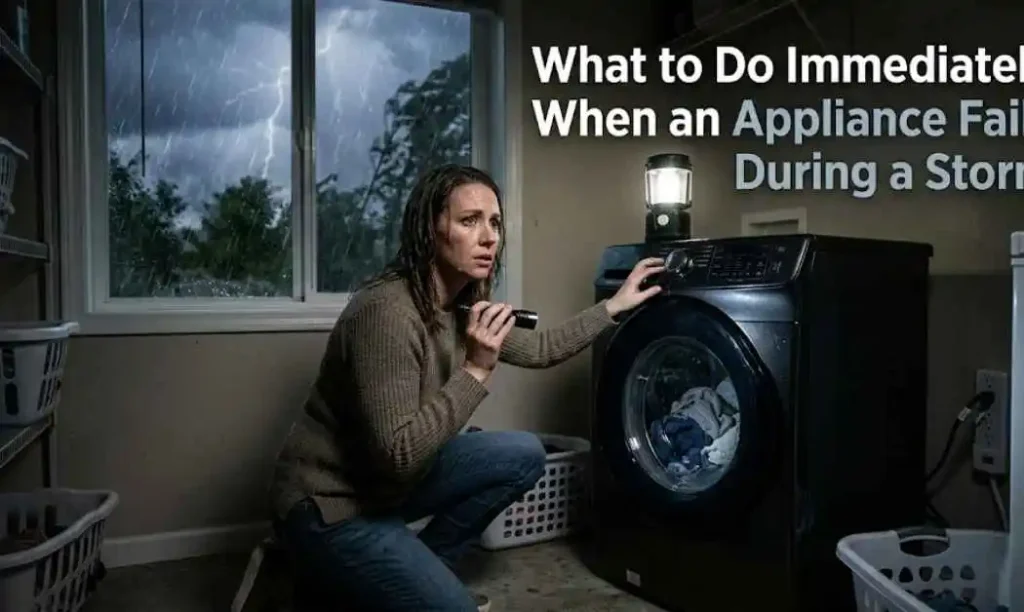
Step One Stay Calm and Assess Safety First
Before you call anyone or try anything, take 60 seconds to determine whether the failure involves a safety risk. A burning smell from any appliance means you should turn it off at the breaker immediately. A gas smell anywhere near your furnace, stove, or dryer means you should leave the home and call your gas utility and emergency services before calling a repair company. Sparks, scorch marks, or a tripping circuit breaker that keeps resetting are all signals to power off the unit and wait for a professional.
If none of those warning signs are present, you are dealing with a mechanical or component failure rather than an immediate hazard which means you have time to troubleshoot basic resets before calling.
Step Two Try the Simple Resets
Modern appliances have built-in protection systems that sometimes shut the unit down over a temporary fault. For a furnace, check the thermostat batteries, verify the filter is not completely blocked, and check whether the unit’s reset button has tripped. For a washer or dryer, check whether a circuit breaker has flipped. For a refrigerator, confirm the interior temperature controls have not been accidentally adjusted. These basic checks take two minutes and occasionally save you a service call fee.
Do not go beyond this level of troubleshooting on gas appliances, electrical control boards, or refrigerant systems. The repair itself is not the risk the risk is that an incorrect DIY repair during a storm compromises safety systems that exist to protect your household.
Step Three Call a Licensed Emergency Appliance Repair Service in Oshawa
This is the step many people delay while they search online forums, watch video tutorials, or wait to see if the problem resolves on its own. During an Oshawa winter storm, delay costs you in two ways: your home gets colder and more uncomfortable, and you extend the window of potential secondary damage frozen pipes from a failed furnace, spoiled food from a failed refrigerator, or water damage from a washing machine that has stopped mid-cycle with water inside.
A licensed appliance repair team serving the Oshawa and Durham Region area can dispatch a technician even during active snowfall. They arrive with diagnostic equipment and the most commonly needed replacement parts already on the truck, which means many repairs are completed in a single visit without a return trip to source components. When you call, be specific about the appliance, the symptoms, and whether you suspect a safety issue that information helps the dispatcher prioritize your call correctly.
Step Four Protect Your Home While You Wait
If your furnace is down, close off rooms you are not using and gather your household into one or two central rooms. Use safe supplemental heating like an electric space heater on a hard floor, well away from curtains and furniture. Never use a gas oven, barbecue, or camp stove for indoor heating the carbon monoxide risk in a sealed winter home is extremely serious, and Ontario emergency services respond to these incidents every single winter.
If your refrigerator is failing, keep the doors shut. Place a thermometer inside if you have one. The four-hour rule for a full fridge and two-hour rule for a half-full one are reasonable safety guidelines, but when in doubt about the temperature of cooked proteins or dairy, discard rather than risk illness.
If your dryer is down, lay clothes flat on drying racks near a heat source rather than hanging them on radiators, which can create a fire hazard in dry winter air.
How Emergency Appliance Repair Works in Oshawa During Winter Storms
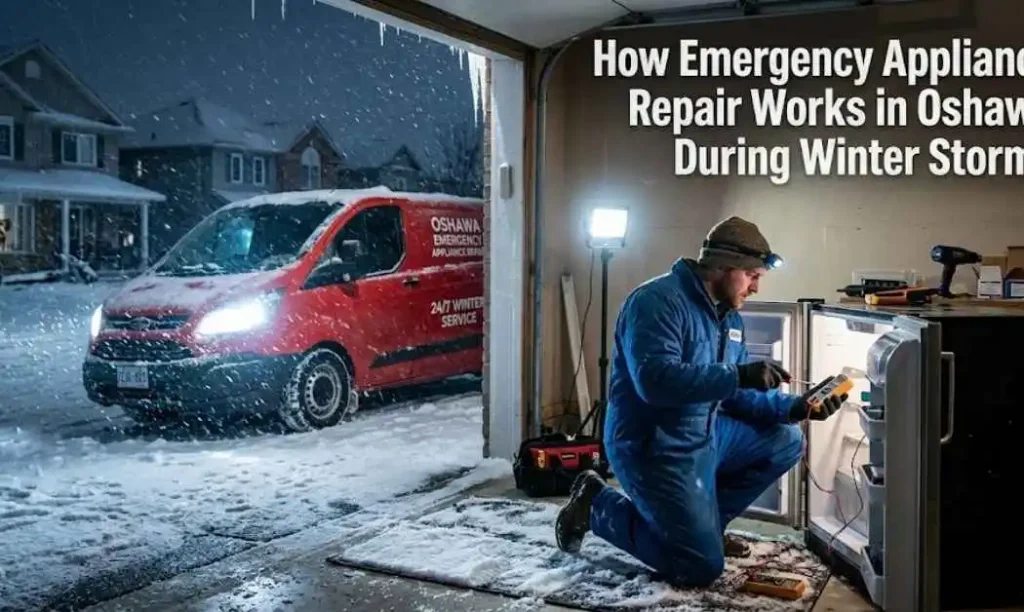
Many residents do not realize that emergency appliance repair in Oshawa operates differently from a standard weekday booking. A 24/7 emergency call is dispatched based on urgency rather than schedule, with heating appliance failures prioritized during active cold weather alerts. Durham Region technicians who specialize in emergency work typically carry a broader parts inventory than a regular service vehicle because they know a second trip may not be feasible in bad road conditions.
When the technician arrives, the diagnostic process on a winter emergency call is usually faster because cold-weather failure modes are well understood. A furnace that will not ignite in January is almost certainly an ignitor, pressure switch, or drainage issue rather than something obscure. That pattern recognition means your repair is completed efficiently rather than through an extended process of elimination.
After the repair, a quality technician will also give you a brief assessment of anything else they noticed during the service call that could cause problems later in the season. That kind of proactive communication is worth paying attention to, because catching a secondary issue during the same visit is far less disruptive than scheduling a second emergency call two weeks later.
Specific Appliance Repair Guidance for Oshawa Winters
Furnace Repair in Winter Storms
The key decision point with a furnace failure during a storm is how quickly interior temperatures are dropping. If you have a newer, well-insulated home, you may have three to four hours before conditions become uncomfortable. An older home in North Oshawa or a heritage property near the downtown core may lose heat much faster. If temperatures inside are falling quickly and the repair technician cannot arrive within 60 to 90 minutes, consider moving your household to a neighbour’s home, a hotel, or one of Oshawa’s designated warming centres that open during extreme cold alerts.
For the furnace itself, do not attempt to bypass safety controls or manually hold open a gas valve. These controls exist to prevent carbon monoxide buildup, fire, and explosion. Wait for the licensed technician.
Refrigerator and Freezer Repair in Winter
If you are waiting for a technician and concerned about your freezer contents, a full freezer maintains safe food temperatures for approximately 48 hours if the door remains closed. A half-full freezer is safe for about 24 hours. The refrigerator compartment is more vulnerable four hours with the door shut is a reasonable guideline at normal room temperature, but if your home is already cooling down due to a simultaneous furnace issue, factor that in.
Do not move perishables to your garage or outside. The temperature fluctuations in those environments are unpredictable and the freezing and thawing cycle is more damaging and more dangerous than a stable cool temperature inside the fridge.
Dryer Vent Inspection Before and After Storms
This is an often-ignored maintenance task that prevents the majority of winter dryer failures. Before storm season, have the exterior dryer vent cap cleared of any debris or nesting material. After a significant ice storm, check that the vent cap flap has not been sealed shut by ice. A dryer running against a blocked vent will either shut down via thermal protection or, in worst cases, overheat the lint trap area which is a fire risk.
If your dryer stops producing heat and the vent checks out clean, the thermal fuse and heating element are the next components to assess, and both are jobs for a qualified technician with the right testing equipment.
Dishwasher Repairs in Freezing Conditions
Dishwashers in homes with utility connections running through uninsulated exterior walls can experience inlet valve freezing in particularly cold snaps. If your dishwasher refuses to fill, do not force the cycle. Running the motor dry will burn out the wash pump. Shut it down, check whether the supply line feels cold or rigid, and call for service.
Choosing the Right Appliance Repair Service in Oshawa for Storm Emergencies
Not every repair company operating in the Oshawa area is equipped for true winter emergency work. Here is what to look for when making that call during a storm.
Availability around the clock matters most. A company that operates with after-hours answering and genuine dispatch capability is very different from one that lists 24/7 on its website but routes after-hours calls to a voicemail.
Ask whether the technician arriving is licensed and insured. In Ontario, appliance repair technicians working on gas appliances are required to hold a gas technician certification through the Technical Standards and Safety Authority (TSSA). Electrical work associated with appliance repair must comply with the Ontario Electrical Safety Code. Choosing an unlicensed technician to save money during an emergency is a risk that often results in voided manufacturer warranties and potential liability issues if something goes wrong.
Ask about parts availability. A well-equipped emergency service vehicle carries parts for the most common repair scenarios across the major appliance brands serving the Oshawa market Whirlpool, Samsung, LG, GE, Maytag, Bosch, and others. A company that consistently has to order parts and return on a second visit is not truly equipped for emergency service.
Ask about service guarantees. Reputable appliance repair companies in Oshawa back their work with a warranty on both parts and labour. A company unwilling to guarantee its emergency repair work is not one worth trusting in a crisis.
Preparing Your Appliances for Oshawa Winter Before Storm Season Hits
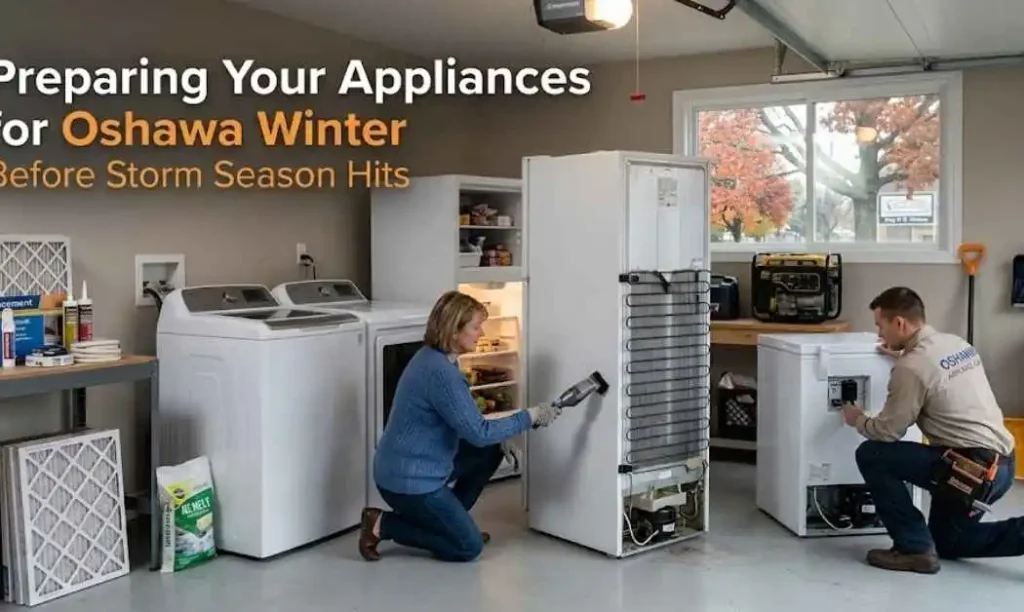
The best emergency repair strategy is avoiding the emergency entirely. The period between October and early December before the worst of Oshawa’s winter arrives is the ideal time to service the appliances that carry the heaviest winter load.
Schedule a furnace inspection and filter replacement before temperatures drop below zero consistently. Have your dryer vent professionally cleaned if it has not been done in the past year. Check washing machine hose connections for any hairline cracks or swelling that suggests the rubber is degrading. Test your refrigerator door seals by closing the door on a piece of paper if the paper slides out easily, the seal needs replacing before it faces the temperature stress of a cold-weather cycle.
These are small investments in time and cost that eliminate the scenario where you are on the phone looking for emergency service during a blizzard with the whole family huddled in the living room.
Appliance Brands Commonly Repaired in Oshawa Winter Emergencies
Technicians serving the Oshawa and Durham Region area regularly work on a wide range of major appliance brands during winter emergency calls. Whirlpool, Maytag, Samsung, LG, GE, Frigidaire, Bosch, KitchenAid, Amana, and Kenmore are among the most commonly encountered brands in residential repairs across the city’s neighbourhoods, from Lakeview and Donevan in the south to Pinecrest and Samac in the north.
Brand-specific familiarity matters on emergency calls because wiring diagrams, error codes, and known failure patterns vary significantly between manufacturers. A technician who works across all major brands on a regular basis arrives with relevant knowledge that shortens the diagnosis time considerably.
👉🏻Discover More About Unique Appliance Problems[ How Hard Water in Durham Region Destroys Washing Machine Drums ]
Frequently Asked Questions
Will a technician come to my home during an active snowstorm?
Yes. Licensed emergency appliance repair services operating in Oshawa dispatch technicians year-round, including during active winter storms. Response time may be longer than a typical weekday call due to road conditions, but heating appliance failures are prioritized, especially when there are vulnerable household members such as young children, elderly adults, or individuals with medical conditions present.
My furnace stopped working in the middle of the night during a storm. Is it safe to wait until morning?
It depends on your household situation and how quickly your home is losing heat. If interior temperatures remain above 15 degrees Celsius and your household is healthy adults, waiting a few hours may be manageable with proper layering and safe supplemental heating. If you have young children, elderly family members, or anyone with respiratory or cardiovascular health conditions, treat a nighttime furnace failure as a genuine emergency and call immediately.
Can I use my gas oven to heat my home while I wait for the furnace repair technician?
No. This is one of the most dangerous things you can do in a sealed winter home. Gas ovens produce carbon monoxide during operation, and without adequate ventilation which a properly sealed winter home does not provide levels can build to lethal concentrations within hours. Use electric space heaters, blankets, and closed-off rooms to conserve warmth instead.
How long does an emergency appliance repair typically take in Oshawa?
Most emergency repairs are completed in a single visit lasting between 45 minutes and two hours, depending on the appliance and the specific fault. Technicians arriving equipped with common replacement parts for the major brands can complete the majority of furnace ignitor replacements, control board swaps, heating element installations, and similar jobs on the first visit. More complex repairs or less common parts may require a follow-up visit.
Does home insurance cover emergency appliance repairs in Ontario?
Standard Ontario home insurance policies generally do not cover the mechanical breakdown of household appliances. Some policies include optional equipment breakdown coverage as an add-on, which may apply to emergency repair costs. Secondary damage caused by an appliance failure for example, water damage from a burst pipe following a furnace failure is more likely to fall under standard coverage. Review your policy or speak with your broker for specifics.
What should I do if I smell gas near my furnace or stove during a storm?
Leave the home immediately without switching any lights or electrical devices on or off, as even that small spark can ignite accumulated gas. Once outside, call 911 and your gas utility’s emergency line. Do not call your appliance repair service until the gas utility has cleared the property and confirmed it is safe to re-enter. This is not a situation for troubleshooting it is always an emergency services call first.
Are appliance repair costs higher during winter storm emergency calls?
Most reputable appliance repair companies in Oshawa charge a standard after-hours or emergency call premium, which is typically disclosed upfront before the technician dispatches. This is separate from the diagnostic fee and repair cost. Ask for a full estimate before authorizing any work, and confirm whether the service call fee is waived if you proceed with the repair many local companies in Oshawa operate this way.
What appliances are most likely to fail during an Oshawa winter storm?
Furnaces top the list, followed by refrigerators (particularly those in garages or cold basements), dryers with restricted venting, and washing machines with frozen supply line connections. Power surge-related failures affecting dishwasher control boards and washing machine control units also spike during the period when power is restored after an outage, which happens frequently during major ice storm events in Durham Region.
Conclusion
Appliance breakdowns during Oshawa winter storms are not just inconvenient — they put real pressure on your household’s safety and comfort. Knowing the right steps to take, which situations require immediate emergency service, and how to protect your home in the window between failure and repair gives you a meaningful advantage over a situation that can feel completely out of control. The good news is that experienced, licensed appliance repair technicians serving Oshawa and Durham Region operate around the clock precisely because they understand the stakes involved when your heating or essential appliances fail in January.
The longer-term lesson from every winter emergency is the value of preparation done before the storm season arrives. A pre-winter appliance service check, clear dryer vents, inspected furnace components, and an understanding of where to call when things go wrong will serve your household better than any amount of storm-day troubleshooting. Oshawa winters are predictable in their intensity your response to them can be equally prepared.