
Dryer Vent Cleaning Oshawa is an essential home maintenance task during the winter months, especially when heavy snowfall and freezing temperatures are common across the region. Snow-blocked dryer vents are one of the most overlooked fire hazards in Oshawa homes during winter. When snow and ice seal off the exterior vent opening, hot exhaust air and highly flammable lint have nowhere to go, and that trapped heat can ignite a fire inside the duct within minutes. While winter weather creates unique challenges in Ontario, homeowners in other regions also benefit from regular maintenance. Many appliance maintenance experts recommend seasonal inspections to improve safety and extend appliance lifespan.
Signs You Need Professional Appliance Repair in Oshawa
If your appliance starts making unusual noises, stops working properly, leaks water, or shows signs of electrical issues, it may be time to seek professional help. Our experienced technicians provide reliable appliance repair services for refrigerators, washing machines, dryers, dishwashers, and more. Visit our Home Page to learn about our complete repair solutions, explore our Appliance Repair Services for expert assistance, or check our Oshawa Service Area page to see how we help homeowners throughout Oshawa with fast and dependable repairs.
What Actually Happens When Snow Blocks Your Dryer Vent
Most homeowners in Oshawa think about dryer safety in terms of the lint trap inside the machine. They clean it regularly and assume that is enough. What they rarely think about is what is happening at the other end of the vent system, specifically where the exhaust pipe exits the exterior wall or roof of the home.
During a typical Oshawa winter, snowfall events are common from November through March. Snow accumulates along the base of walls, drifts pile up against siding, and ice forms around vent hoods and flaps. When that happens to your dryer vent exit point, the consequences are serious.
Here is the sequence of events that makes snow blockage so dangerous. Your dryer pulls in air, heats it, and pushes that moisture-laden, lint-carrying air through a duct to the outside. The moment that exit point is sealed by snow or ice, the hot air has nowhere to go. It gets pushed back into the duct. The lint that was being carried outward settles back onto the duct walls instead of exiting the home. With each subsequent dryer cycle, more lint accumulates, airflow drops further, and the dryer runs hotter and longer to compensate. Eventually, if the duct walls get hot enough and there is enough lint present, you have the conditions for a dryer fire.
The danger compounds quickly because most people do not realize the vent is blocked. The dryer still runs. It might take a little longer to dry a load, and you might notice the laundry room feels warmer than usual. Those are exactly the warning signs that most Oshawa homeowners brush off during winter, attributing them to the cold weather rather than a potentially life-threatening obstruction.
Why Oshawa Winters Create Unique Vent Blockage Conditions
Oshawa sits along the northern shore of Lake Ontario in Durham Region, and the lake effect plays a meaningful role in how winter weather behaves here. Storms that push across the lake can dump significant amounts of snow in a short window of time. The city typically sees snowfall as early as November, and heavy accumulation events occur multiple times per season, with January being historically the most intense month for major storms.
Beyond the snowfall itself, temperature fluctuations are what make the situation particularly tricky. Oshawa regularly cycles through temperatures that hover right around the freezing mark, which means snow melts partially during the day and refreezes at night. That freeze and thaw cycle is exactly what turns a soft snow drift near your dryer vent into a dense, compacted ice blockage that a simple gust of wind will not dislodge on its own.
The warm, moist air exhausting from your dryer also contributes to the problem. When that humid exhaust meets the cold exterior environment and the already present snow, it accelerates ice formation right at the vent opening. Over the course of a few dryer cycles, what starts as a light snow covering over the vent can turn into a firmly frozen cap that completely seals the exhaust path.
Homes in Oshawa neighborhoods like Eastdale, Farewell, and Lakeview where houses were built in the 1970s and 1980s often have dryer vents positioned low on exterior walls, sometimes only a foot or two above grade. These low-profile placements are especially vulnerable because snow accumulation happens first and most heavily at ground level. Newer builds in north Oshawa developments tend to have better vent placement, but older housing stock across the city remains at significant seasonal risk.
The Lint and Ice Combination: A Double Threat Inside the Duct
Understanding the fire risk from snow blockage requires understanding what is already inside most dryer vents before winter even begins. Lint is the primary combustible material in a dryer fire. It is made up of fine textile fibers that are shed during drying. Every load deposits a small amount of lint into the duct system beyond what the lint trap catches. Over months and years, this material clings to the inside walls of the ductwork, especially in bends and elbows.
When a snow blockage forms at the exterior end of the vent, two things happen simultaneously. First, the fresh lint from each load has nowhere to exit and begins packing back into the duct. Second, the moisture in the dryer exhaust that cannot escape begins condensing inside the duct walls and can freeze. The result is a blockage that is part lint, part ice, and entirely dangerous.
This combination is worse than lint buildup alone because ice blockages do not behave predictably. A homeowner might notice their dryer struggling and attribute it to the cold weather. The vent might partially clear as temperatures rise midday and then reblock at night. That inconsistency makes it difficult to identify the problem without a proper inspection, and all the while the dryer continues to run hotter than it should to compensate for the reduced airflow.
Restricted airflow forces the dryer motor and heating element to work beyond their intended operating parameters. That sustained overheating is what eventually creates ignition risk. Lint, at temperatures above 200 degrees Celsius, can begin to smolder. Inside a sealed duct with no airflow to disperse heat, those temperatures are absolutely achievable.
Signs Your Dryer Vent May Be Snow-Blocked Right Now
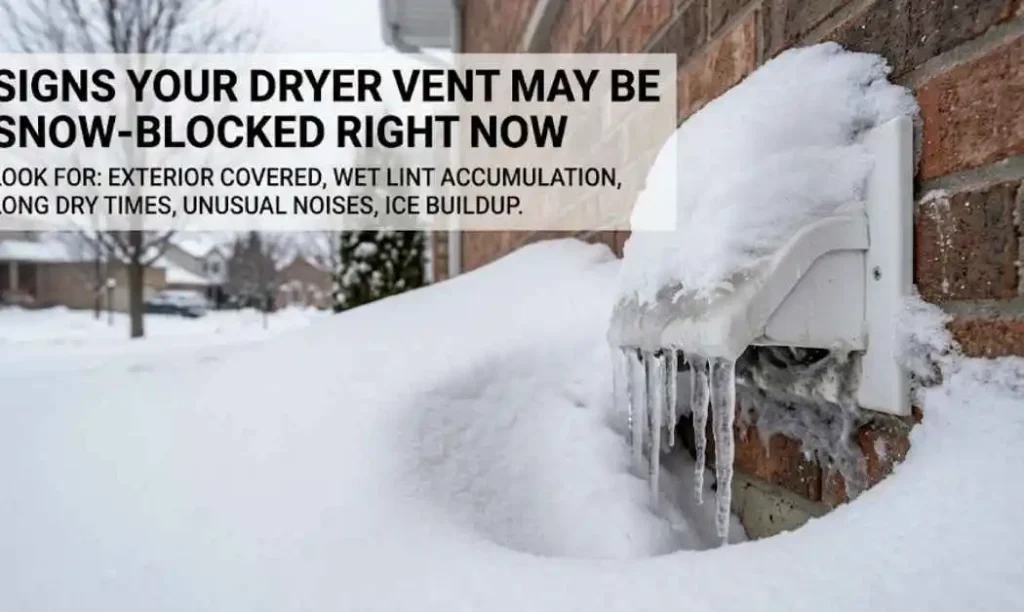
There are several clear indicators that Oshawa homeowners should watch for during winter months. Recognizing these signs early can be the difference between a service call and a house fire.
Your clothes are taking noticeably longer to dry than they did in the fall. A single normal-sized load that used to finish in 40 to 45 minutes is now requiring 70 minutes or more. That extended cycle time is a direct result of poor airflow and heat retention inside the drum.
The dryer itself feels unusually hot to the touch on the top or sides. Under normal operating conditions, a dryer generates heat internally but dispels most of it through the exhaust vent. When that exhaust pathway is blocked, the heat has nowhere to go and the exterior surfaces of the machine become warmer than they should be.
The laundry room feels humid or smells musty during and after a drying cycle. Moisture that cannot exit through the vent will find other ways to disperse into the room. Over time this can also promote mold growth inside the ductwork itself.
You can hear the dryer working harder than usual, with a more labored or high-pitched motor sound. The machine is compensating for restricted airflow by running at higher load levels.
Stepping outside and checking the exterior vent cover during or immediately after a dryer cycle is one of the simplest diagnostics available. Under normal operation you should feel warm air flowing from the vent. If you feel nothing, or if you see that the vent cover is packed with snow or ice, you have confirmed the blockage.
The Fire Risk Is Not Theoretical: What the Data Shows
Dryer-related fires are a documented and serious hazard in Canadian residential settings. The combination of flammable lint, high operating temperatures, and reduced airflow creates conditions that fire investigators consistently identify at the scene of dryer fires. Lint and fiber buildup account for a significant proportion of all dryer vent fires, and the risk spikes in winter for the very reasons described above. Heavier clothing items like winter sweaters, thick hoodies, jeans, and blankets shed far more lint per load than summer fabrics. Dryer use increases during cold months because outdoor line drying is not practical. And the risk of exterior vent blockage from snow and ice adds a seasonal hazard that simply does not exist in warmer months.
For Oshawa homeowners, the combination of heavy winter dryer use, lake-effect snowfall events, and an aging housing stock with older ductwork configurations makes this a particularly relevant local concern. It is not a matter of if a blockage will occur, but when, and how prepared you are when it does.
Professional Dryer Vent Cleaning in Oshawa: What the Service Involves
A professional dryer vent cleaning performed by a qualified appliance service technician in Oshawa is not simply a matter of reaching into the duct with a brush. The service involves a systematic assessment of the entire ventilation pathway from the dryer connection point at the back of the machine all the way to the exterior exhaust termination.
The technician will disconnect the dryer from the wall and inspect the transition hose, which is the flexible section that connects the back of the dryer to the wall duct. This section is prone to crimping and crushing, which restricts airflow and traps lint even without snow involvement. Inside the wall duct, rotary cleaning equipment is used to dislodge and extract lint that has adhered to the duct walls over time. Inspection of elbows and bends is critical because these sections create turbulence that causes lint to accumulate faster than in straight runs.
The exterior vent termination is examined and cleared of any ice, compacted snow, debris, or animal nesting material. The damper flap that is designed to open during dryer operation and seal when not in use is tested to confirm it is operating freely and not frozen in a partially closed position.
Airflow is measured before and after the cleaning to confirm that the service has restored proper ventilation performance. In many cases technicians will also identify whether the installed ductwork is appropriate for the application, since older homes sometimes have plastic or foil accordion-style ducting that has been prohibited by modern building codes due to its tendency to trap lint and collapse.
How Often Should Oshawa Homeowners Schedule Dryer Vent Cleaning
The general recommendation from appliance safety professionals is that dryer vents should be inspected and cleaned at least once per year. For Oshawa households, the timing matters as much as the frequency.
Scheduling a professional cleaning in the fall, before winter sets in, is the most strategically sound approach. A pre-winter cleaning removes the lint that has accumulated over spring, summer, and early fall. It ensures the duct is clear and that airflow is unrestricted heading into the season when snow blockage risk is highest. Starting winter with a lint-free duct means that even if a snow blockage does form temporarily, there is no accumulated fuel load waiting to ignite.
Households with high dryer usage, meaning families with children, those who do multiple loads daily, or those who regularly dry heavy items like towels and bedding, should consider semi-annual cleaning. The same applies to homes with longer duct runs, multiple elbows, or vents that terminate on the north face of the building where snow accumulation is typically heavier.
Mid-winter checks of the exterior vent are strongly recommended after every significant snowfall event. This is a simple visual and tactile check that any homeowner can perform and takes less than two minutes. If the vent is blocked, clearing it promptly removes the immediate hazard and buys time until a professional inspection can be arranged.
Preventive Measures Oshawa Homeowners Can Take Between Professional Cleanings

Beyond scheduling annual or semi-annual professional service, there are practical steps that homeowners across Oshawa can take to reduce winter dryer vent risk.
After every major snowfall, walk around to the exterior side of the home where the dryer vent exits and visually inspect the vent cover. Remove any snow or ice accumulation using a gloved hand or a soft brush. Never use sharp tools near the vent hood as you risk damaging the damper or the duct itself.
Consider the installation of a vent hood cover specifically designed for cold-climate applications. Standard builder-grade vent covers are not optimized for heavy snowfall environments and can become clogged with ice. Cold-climate vent covers feature designs that protect the opening from direct snow accumulation while still allowing free airflow during dryer operation.
Always clean the lint filter inside the dryer before or after every single load. This does not eliminate the need for professional duct cleaning but meaningfully reduces the rate at which lint accumulates in the ductwork beyond the filter.
Avoid running the dryer overnight or when no one is home during winter months. Snow blockages can develop quickly after a storm and the risk of a blocked vent going undetected is highest when the home is unoccupied. Running the dryer while someone is home and awake allows for early detection of warning signs like overheating, extended cycle times, and unusual odors.
👉🏻Discover More About Unique Appliance Problems[ Appliance Repair During Oshawa Winter Storms ]
Frequently Asked Questions
How do I know if my dryer vent is blocked by snow?
Go outside during or immediately after a dryer cycle and hold your hand near the exterior vent. You should feel a steady flow of warm air. If you feel nothing, or if the vent cover is visibly packed with snow or ice, the vent is likely blocked. You may also notice that clothes take much longer than usual to dry, the dryer feels unusually hot on the outside, or the laundry room smells damp during operation.
Is a blocked dryer vent an immediate fire hazard?
Yes, it can be. A snow-blocked vent traps hot exhaust air and forces lint to accumulate inside the duct. Dryers generate significant heat, and when that heat has no exit path, duct wall temperatures rise rapidly. Lint is highly flammable, and a sustained blockage during active dryer use creates the conditions required for a duct fire. It may not ignite on the first cycle, but the risk increases with every additional load run through a blocked vent.
How often should I have my dryer vent professionally cleaned in Oshawa?
At minimum, once per year, ideally in the fall before winter weather arrives. Households with heavy dryer usage, long duct runs, or older ductwork should consider having the system inspected twice a year. Always schedule an inspection if you notice warning signs like extended drying times, excess heat, or musty odors regardless of when the last cleaning was performed.
Can I clear a snow-blocked dryer vent myself?
You can and should clear accumulated snow from the exterior vent opening as part of routine winter maintenance. However, clearing the exterior opening is not a substitute for professional duct cleaning. Lint that has already accumulated deep in the duct, or ice that has formed inside the duct rather than just at the exterior opening, requires professional equipment to remove safely and completely.
What kind of dryer vent duct should I have in my Oshawa home?
Modern building code in Ontario requires rigid metal ductwork for dryer venting, typically smooth-interior galvanized steel or aluminum. Flexible plastic or foil accordion-style ducting is no longer code-compliant for new installations because it collapses easily, restricts airflow, and traps lint at every corrugation. If your Oshawa home still has plastic or foil duct connecting the dryer to the wall, upgrading to rigid metal is a meaningful safety improvement.
Does my dryer warranty cover fire damage from a clogged vent?
Most dryer manufacturer warranties explicitly exclude damage resulting from improper installation or lack of maintenance, and a clogged or improperly vented duct typically falls under that exclusion. Beyond the warranty consideration, your home insurance provider may also raise questions about maintenance history following a dryer fire. Keeping records of annual professional vent cleanings is a reasonable precaution.
How long does a professional dryer vent cleaning take?
For most Oshawa homes, a standard dryer vent cleaning takes between 45 minutes and an hour and a half depending on the length of the duct run, the number of bends, and the extent of existing lint accumulation. Homes with complex routing or significant buildup may take longer.
Is dryer vent cleaning covered by home insurance in Ontario?
Routine maintenance services like dryer vent cleaning are generally not covered by home insurance, as they fall under homeowner maintenance responsibilities. However, the cost of the service is a relatively small amount compared to the potential financial and personal consequences of a dryer fire, making it a sound preventive investment.
Conclusion
Winter in Oshawa is serious business, and your dryer vent is a part of your home that deserves serious attention every season. Snow blockage is not a rare or unlikely event here. It is a predictable consequence of lake-effect snowfall, freezing temperatures, and vent placement, and when it combines with lint buildup inside the duct, the fire risk it creates is both real and preventable.
Scheduling a professional dryer vent cleaning before each winter season, performing quick visual checks after every major storm, and knowing the warning signs of a blocked or restricted vent are the practical steps that keep Oshawa families safe. The appliance repair and vent cleaning professionals serving the Oshawa area are equipped to inspect, clean, and advise on your specific ductwork configuration, so you are not guessing about the condition of a system that directly affects your household safety.